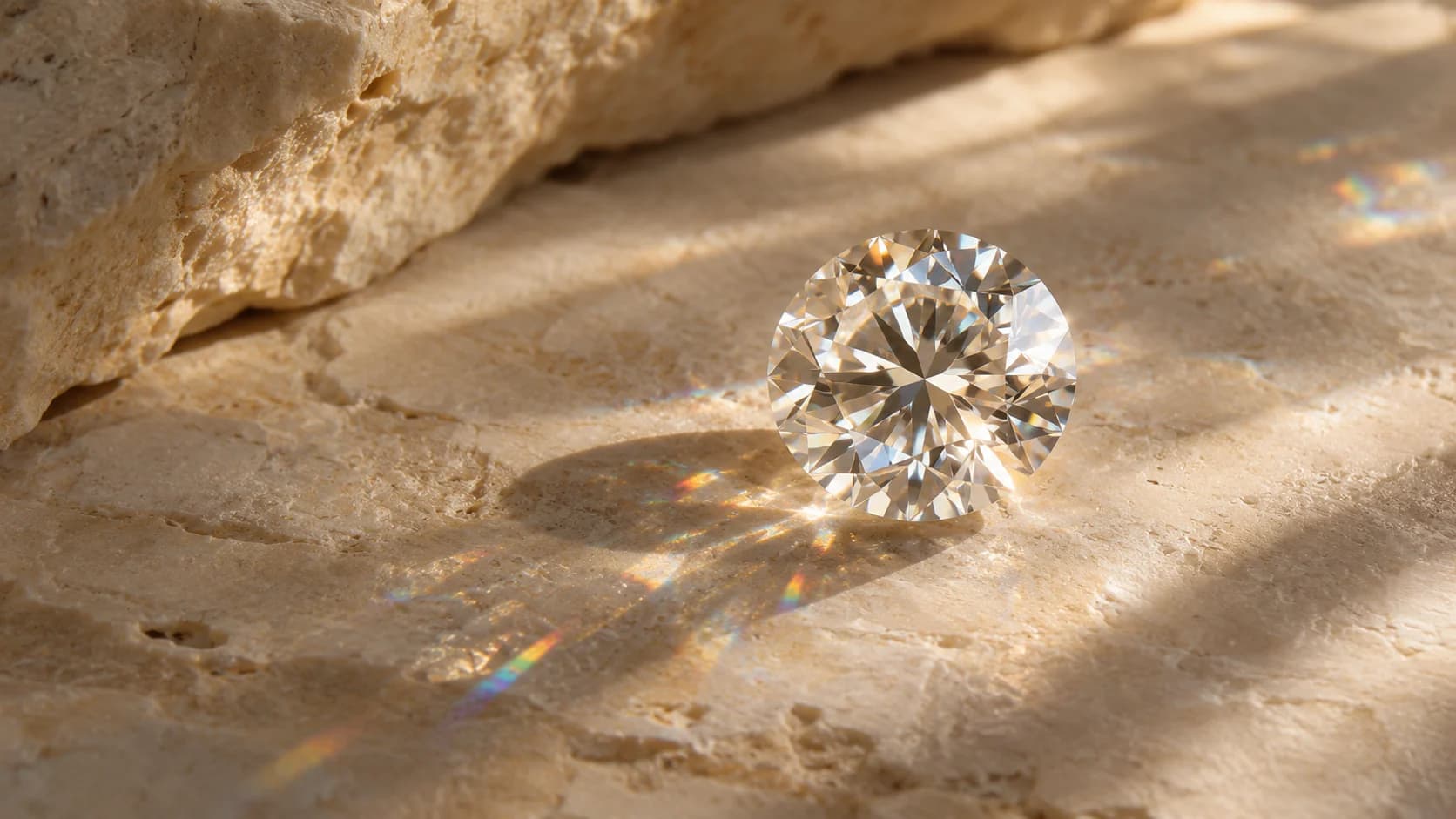
A lab-grown diamond is a real diamond. It has essentially the same carbon crystal structure and properties as a natural diamond; the key difference is where it forms.
How is a lab-grown diamond made?
Natural diamonds form underground, whereas lab-grown diamonds are produced under controlled conditions. Common methods include high pressure and high temperature (HPHT) and chemical vapour deposition (CVD). The resulting crystal can then be cut and polished.
The fact that a diamond was grown in a laboratory describes its origin. When choosing a stone, ask clearly about its origin and any treatments.
Is it an imitation?
No. Lab-grown diamond is not the same as a diamond look-alike made from a different material, such as moissanite or cubic zirconia. Determining a diamond’s origin may require expert examination and specialised laboratory equipment.
How can I compare quality?
Cut, colour, clarity and carat weight are four widely used characteristics for describing and comparing a diamond. Appearance and price depend on a combination of factors, so consider the whole stone rather than a single grade.
If an independent gemological report is available, review its number and the stated origin, characteristics and any treatments. Report content and grading methods can vary between laboratories.
A Di’Oro certificate and an independent report
A Di’Oro product certificate has a QR code that lets you view information recorded for your piece on our website. It is different from an independent gemological laboratory’s assessment of a stone.
Before purchasing, ask our team which documents and stone details accompany the piece you are considering.
Frequently asked questions about diamonds
Is a lab-grown diamond a real diamond?
Yes. A lab-grown diamond is a real diamond, with essentially the same chemical, crystal, physical and optical properties as a mined diamond.
How does it differ from a mined diamond?
The main difference is origin: a mined diamond forms underground, while a lab-grown diamond is created under controlled conditions. A gemological laboratory can identify the origin.
Is it the same as moissanite or cubic zirconia?
No. Moissanite and cubic zirconia are different materials used as diamond simulants; a lab-grown diamond is a diamond.
What are the 4Cs?
The 4Cs are cut, colour, clarity and carat weight. They help describe a diamond together; report content and grading scales depend on the issuing laboratory.
Does carat measure a diamond’s size?
Carat measures weight: one carat equals 0.20 grams. Diamonds of the same carat weight can appear different in size depending on their cut and proportions.
Why does cut matter?
A diamond’s proportions and facet arrangement influence how light interacts with the stone and how it appears.
How do I verify my Di’Oro certificate?
Scan the QR code on your card or enter its certificate number on our verification page to view your piece-specific brand certificate. If a separate independent laboratory report is provided, verify its report number with the issuing laboratory.
Is diamond suitable for everyday wear?
Diamond is highly resistant to scratching, but a hard impact can chip it or damage its setting. Consider removing jewellery for sports and heavy work.
How should I clean diamond jewellery?
If suitable for the setting and other stones, use warm water, a little mild soap and a soft brush. Avoid bleach and abrasives, and seek professional advice for delicate pieces.
Is a lab-grown diamond always more sustainable?
Environmental impact depends on the producer, energy source and production conditions. It should not be assumed that every lab-grown diamond is automatically more sustainable.
Why do diamond jewellery prices vary?
Factors such as the stone’s characteristics, metal, design and craftsmanship affect price. Contact us for current information about a particular piece.
Sources
Explore the independent sources used in this guide.