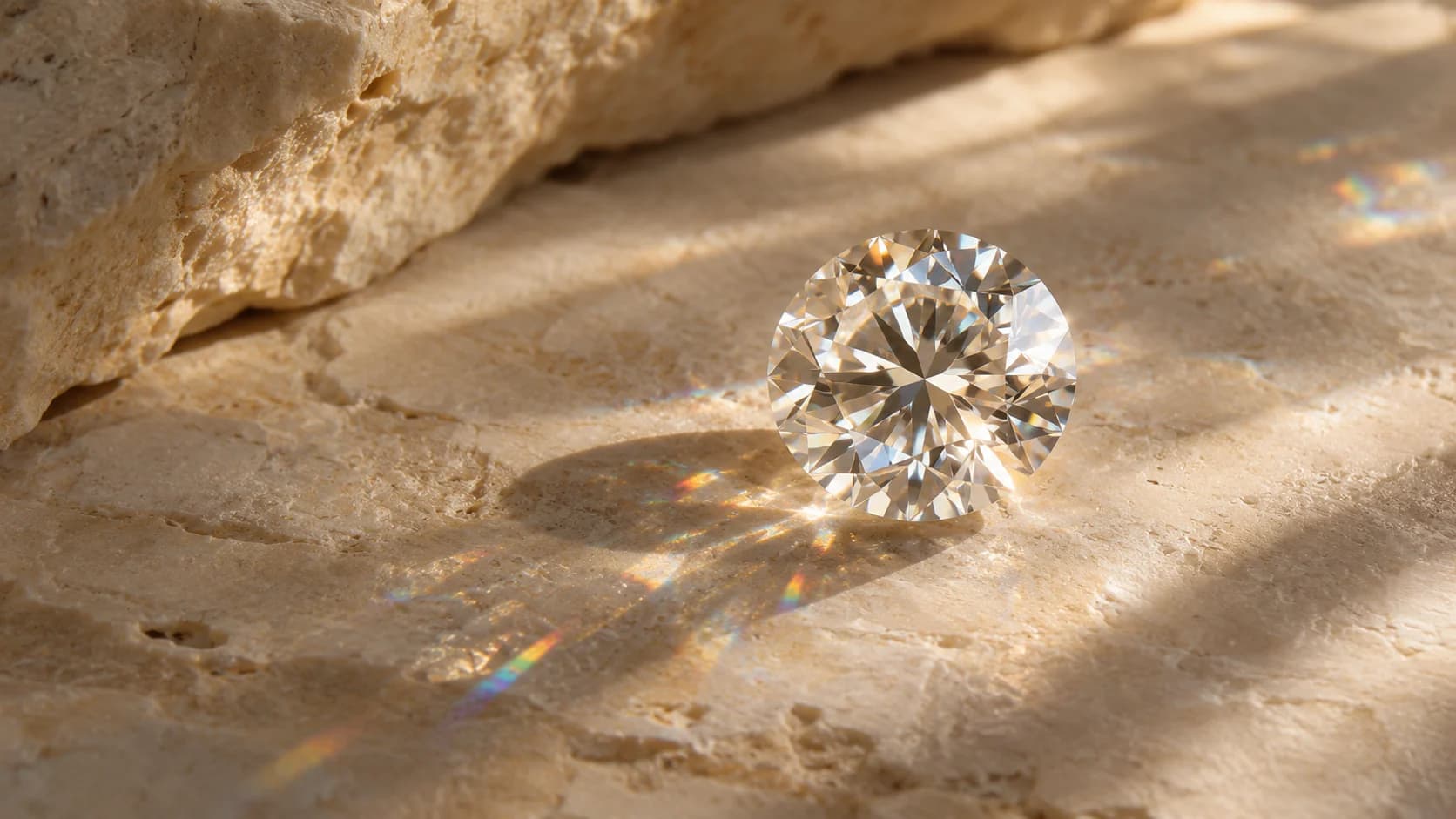
A lab-grown diamond is a real diamond, not an imitation or a diamond simulant. Advanced technology recreates diamond-forming conditions in a controlled environment, producing the same crystal.
The same chemistry, crystal and light
Like a mined diamond, a lab-grown diamond is made of carbon and has the same crystal structure. Its physical and optical properties are essentially the same. A gemological laboratory can examine a diamond to reliably identify its origin.
How are they grown?
Two methods are used: HPHT (high pressure, high temperature), which recreates conditions deep within the earth, and CVD (chemical vapour deposition), which grows carbon layer by layer on a diamond seed. Both methods produce a real diamond crystal ready to be cut and polished.
Independent laboratory reports
Independent gemological laboratories such as IGI and GIA offer assessment services for lab-grown diamonds. Report content and grading systems vary according to the laboratory, the stone and the type of report.
Why we choose them
Lab-grown diamonds offer a contemporary choice for jewellery design. Ask about a stone’s origin, report and characteristics to find the piece that is right for you.
Documented authenticity
Each Di’Oro piece is delivered with a piece-specific certificate containing the stones’ carat, colour and clarity details, which can be verified on this site via a QR code. Stones used in selected designs are sourced from Appsilon Lab Diamonds.
Frequently asked questions
Is a lab-grown diamond a real diamond?
Yes. A lab-grown diamond is a real diamond, with essentially the same chemical, crystal, physical and optical properties as a mined diamond.
How does it differ from a mined diamond?
The main difference is origin: a mined diamond forms underground, while a lab-grown diamond is created under controlled conditions. A gemological laboratory can identify the origin.
Is it the same as moissanite or cubic zirconia?
No. Moissanite and cubic zirconia are different materials used as diamond simulants; a lab-grown diamond is a diamond.
What are the 4Cs?
The 4Cs are cut, colour, clarity and carat weight. They help describe a diamond together; report content and grading scales depend on the issuing laboratory.
Does carat measure a diamond’s size?
Carat measures weight: one carat equals 0.20 grams. Diamonds of the same carat weight can appear different in size depending on their cut and proportions.
Why does cut matter?
A diamond’s proportions and facet arrangement influence how light interacts with the stone and how it appears.
How do I verify my Di’Oro certificate?
Scan the QR code on your card or enter its certificate number on our verification page to view your piece-specific brand certificate. If a separate independent laboratory report is provided, verify its report number with the issuing laboratory.
Is diamond suitable for everyday wear?
Diamond is highly resistant to scratching, but a hard impact can chip it or damage its setting. Consider removing jewellery for sports and heavy work.
How should I clean diamond jewellery?
If suitable for the setting and other stones, use warm water, a little mild soap and a soft brush. Avoid bleach and abrasives, and seek professional advice for delicate pieces.
Is a lab-grown diamond always more sustainable?
Environmental impact depends on the producer, energy source and production conditions. It should not be assumed that every lab-grown diamond is automatically more sustainable.
Why do diamond jewellery prices vary?
Factors such as the stone’s characteristics, metal, design and craftsmanship affect price. Contact us for current information about a particular piece.
Sources
For more information about diamonds, explore these independent gemological sources.
Explore our diamond guides